
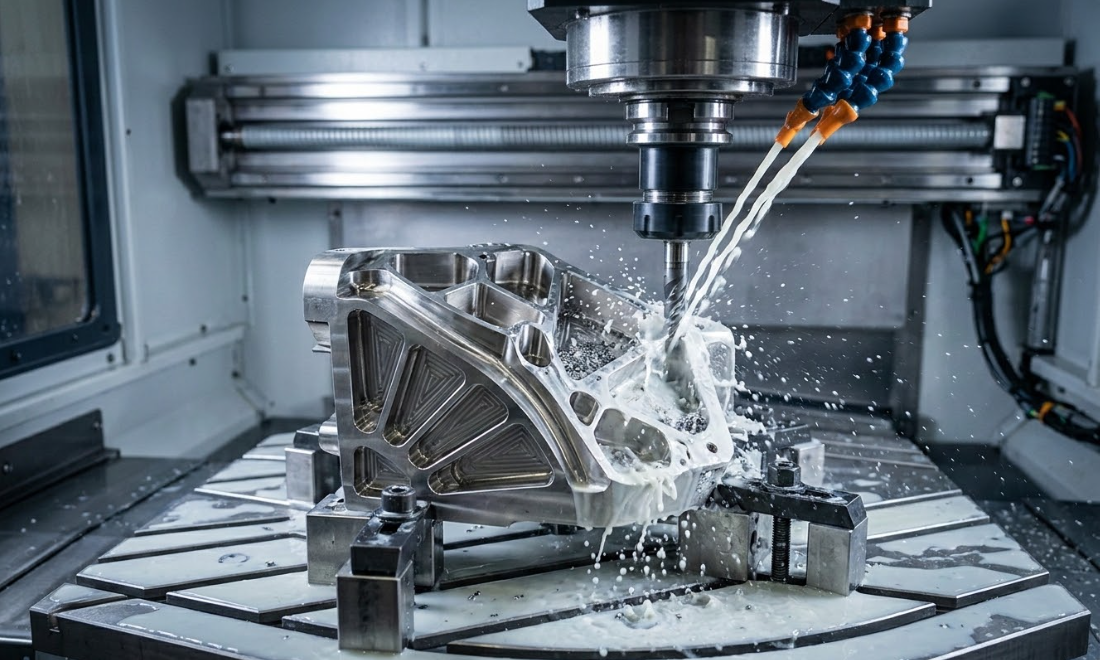
Precision CNC machining underpins a huge share of the parts that keep modern industry running — from the brackets inside a semiconductor tool to the housings in a medical device. Malaysia has become one of Southeast Asia's most established manufacturing hubs, with a dense network of precision engineering companies serving electronics, automotive, medical and industrial equipment manufacturers both locally and abroad.
If you are sourcing custom machined parts, understanding how precision CNC machining actually works — the processes involved, the materials available, and the tolerances you can realistically expect — will help you brief your supplier correctly and avoid costly rework.
This guide walks through the fundamentals of precision CNC machining: what it is, the main processes used, the metals and plastics it can handle, the tolerances achievable, and the industries that rely on it most heavily. Use it as a reference whether you are writing your first RFQ or reviewing quotes from multiple suppliers.
What Is Precision CNC Machining?
CNC stands for computer numerical control. In precision CNC machining, a computer-controlled cutting tool removes material from a solid block or bar stock — known as subtractive manufacturing — to produce a part that matches a CAD model to a specified tolerance.
Unlike manual machining, where an operator manually adjusts feeds, speeds and tool position, a CNC machine executes a pre-programmed toolpath with a level of repeatability that manual methods cannot match.
"Precision" in this context refers to the tight dimensional accuracy and consistent repeatability the process can achieve, typically measured in microns or thousandths of a millimetre. Precision CNC machining is used wherever a part's fit, function or performance depends on dimensions being held reliably across every unit produced — whether that's a single prototype or a production run of thousands.
Common CNC Machining Processes
Precision CNC machining is not a single process — it is a family of related techniques, each suited to different part geometries. The most common include:
CNC Milling — a rotating cutting tool removes material from a stationary workpiece to create flat faces, pockets, slots, holes and contoured surfaces. Milling is the most versatile CNC process and is used for the majority of prismatic (block-shaped) parts.
CNC Turning — the workpiece rotates against a stationary or moving cutting tool, ideal for cylindrical parts such as shafts, bushings, pins and threaded components.
5 Axis Machining — the cutting tool and/or workpiece move along five coordinated axes instead of three, allowing complex geometries and multiple faces to be machined in a single setup. This reduces repositioning error and is essential for parts with compound angles or undercuts.
Drilling, Tapping & Boring — secondary operations for creating precise holes, internal threads and bored features, often combined with milling or turning within the same setup.
Wire EDM (Electrical Discharge Machining) — used for hardened materials or intricate internal profiles that conventional cutting tools cannot reach, cutting material using electrical sparks rather than mechanical force.
Most machined parts require a combination of these processes. A typical bracket, for example, might be milled for its overall shape, drilled for mounting holes, and tapped for threaded fasteners — all within one or two machine setups.
Materials Used in Precision CNC Machining
One of the strengths of CNC machining is the sheer range of materials it can process. The right choice depends on mechanical requirements, environment, cost and the finishing the part will need downstream. Common metals include:
Aluminium (6061, 7075, 5052) — lightweight, corrosion-resistant and easy to machine; the default choice for housings, brackets and enclosures.
Stainless Steel (303, 304, 316, 17-4PH) — corrosion and heat resistant, used for fasteners, medical components and food-grade equipment.
Tool Steel (D2, A2, O1) — high hardness and wear resistance, common in dies, moulds and cutting tools.
Brass (C360) — excellent machinability and electrical conductivity, often used for fittings and electrical components.
Titanium — high strength-to-weight ratio for aerospace and medical implants, though slower and more costly to machine.
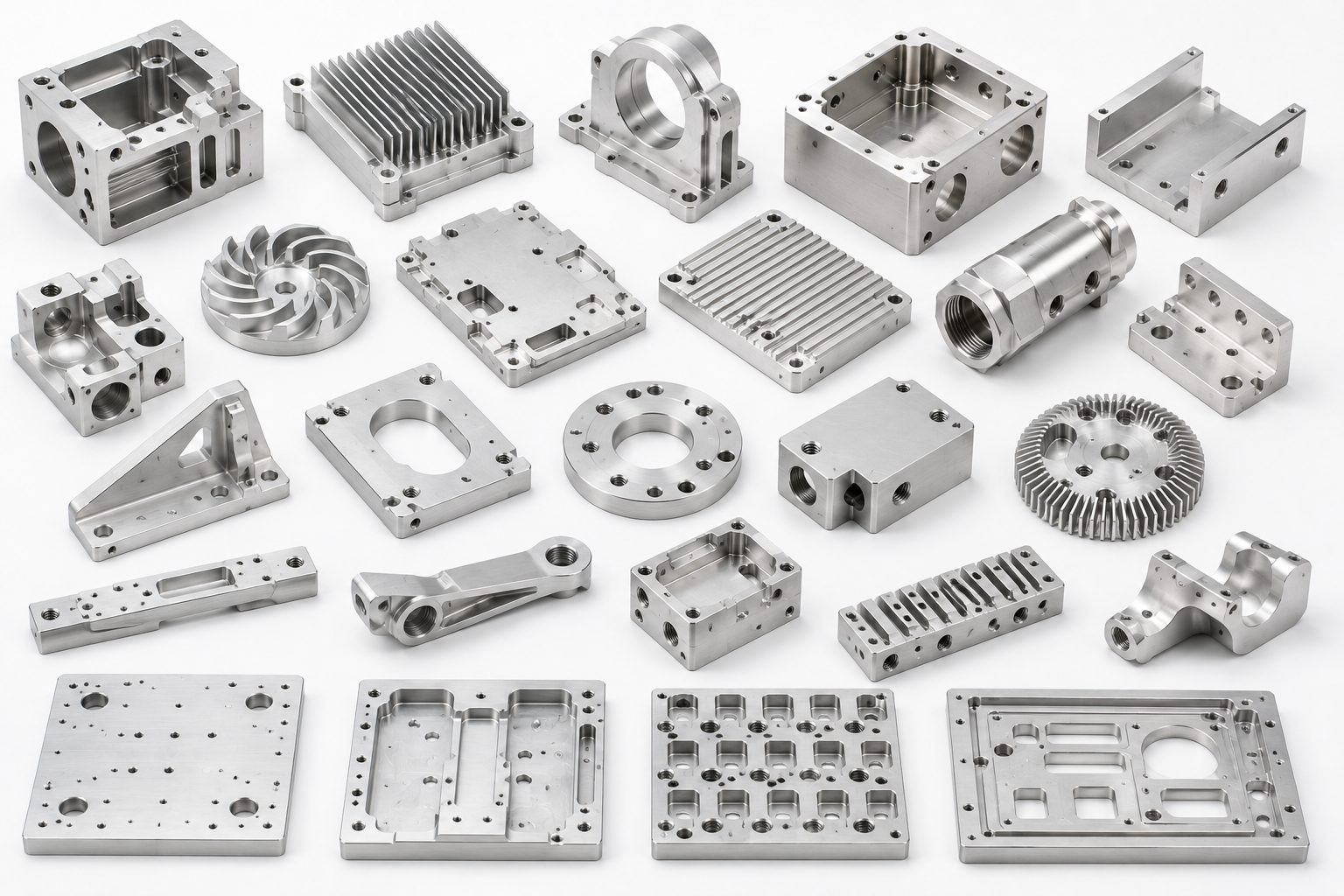
Engineering plastics are equally common: POM (Delrin), Nylon, PTFE, PEEK and PVDF are widely machined for applications needing dimensional stability, chemical resistance or electrical insulation. Choosing between metal and plastic — and between specific grades — usually comes down to load-bearing requirements, operating temperature, chemical exposure and whether the part needs to be electrically or thermally insulating. See the full range of CNC materials we work with for a broader reference.
Achievable Tolerances in CNC Machining
Tolerance is the permissible variation in a dimension, and it is one of the most important — and most misunderstood — specifications on a drawing. Standard CNC milling and turning can typically hold tolerances in the range of ±0.05mm to ±0.1mm for general features, while tighter critical dimensions can often be held to ±0.01mm to ±0.02mm with the right machine, tooling and process control. Extremely tight tolerances below this range are achievable but usually require secondary finishing operations such as grinding, honing or lapping, and they add cost.
Several factors influence what tolerance a shop can realistically hold on a given feature:
Machine rigidity and condition — a well-maintained, rigid machine holds tighter tolerances more consistently than an older or less rigid one.
Number of setups — every time a part is repositioned, some alignment error is introduced. Processes like 5 axis machining that complete more features in one setup reduce this cumulative error.
Material behaviour — some materials (particularly softer plastics) deform or relax after machining, making very tight tolerances harder to hold consistently.
Part geometry — thin walls, deep pockets and long, unsupported features are inherently harder to hold to tight tolerance than short, well-supported ones.
Environmental control — temperature fluctuations in the workshop can affect both the machine and the workpiece on very tight-tolerance jobs.
As a buyer, it pays to specify tight tolerances only where they are functionally necessary — on a mating surface or a bearing fit, for example — rather than applying a blanket tight tolerance across every dimension on the drawing. This keeps quotes competitive without compromising the fit and function that actually matter.
Industries and Applications
Malaysia's manufacturing base spans several sectors that rely heavily on precision CNC machining:
Electronics & Semiconductor — Malaysia is a major regional hub for semiconductor back-end manufacturing, and CNC-machined jigs, fixtures, brackets and enclosures are used extensively across the supply chain.
Automotive — precision components for engines, transmissions and assembly tooling.
Medical Devices — surgical instrument components, device housings and precision fixtures, often requiring biocompatible materials and tight tolerances.
Oil & Gas — corrosion-resistant fittings, valve components and custom parts built to withstand harsh operating environments.
General Industrial Equipment — machine parts, tooling components and replacement parts for manufacturing lines.
How to Choose a Precision CNC Machining Partner
With so many machining suppliers to choose from, a few criteria consistently separate a reliable partner from a risky one:
Equipment capability — does the supplier have the right machines (including 5 axis capability, where needed) for your part's complexity?
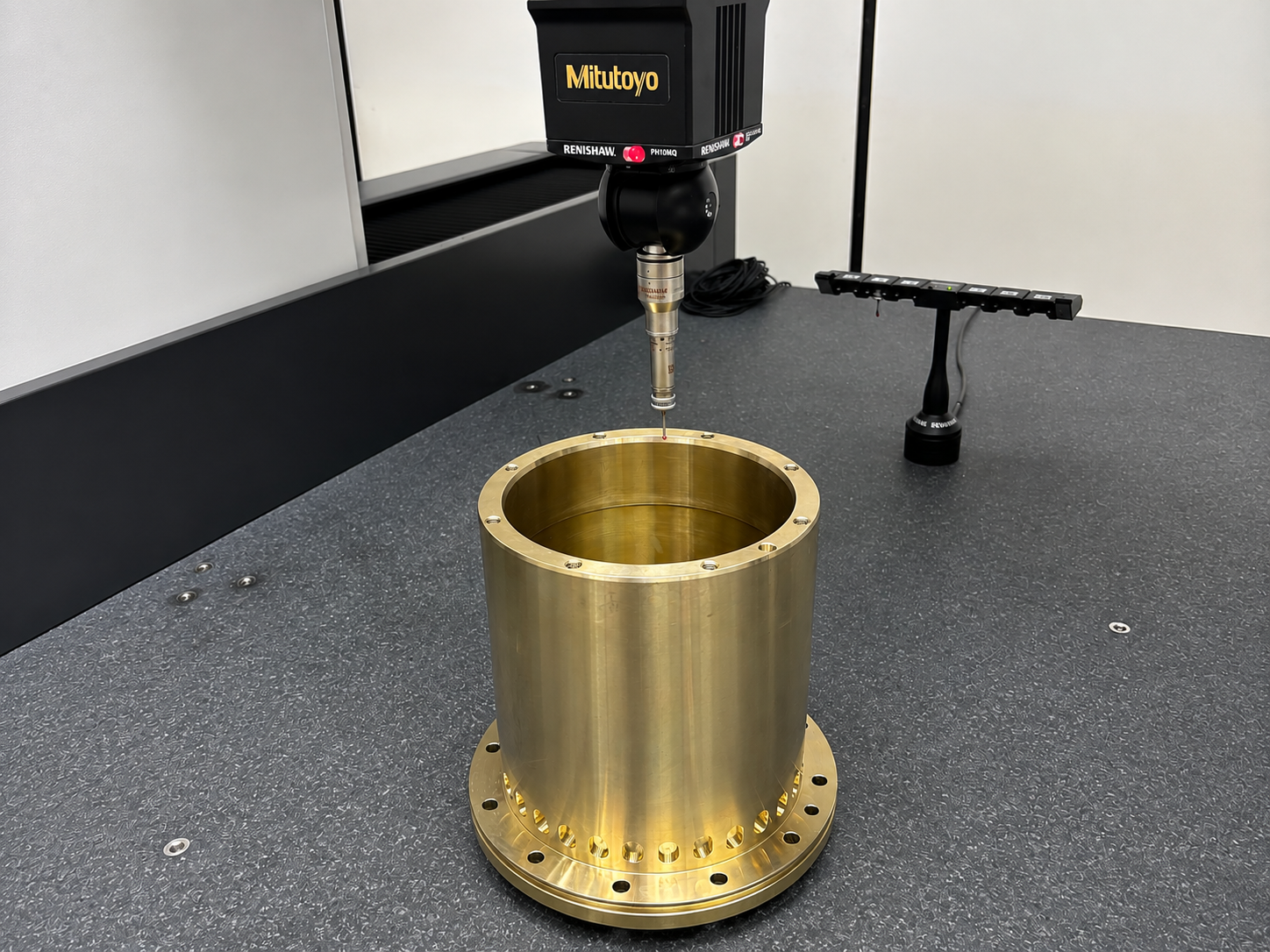
Quality control — are dimensional checks documented, and can the supplier provide inspection reports or certificates of conformance?
Material sourcing and traceability — particularly important for regulated industries such as medical and aerospace.
Design for manufacturability (DFM) feedback — a good supplier reviews your drawing and flags features that will be costly or impossible to hold before quoting, not after the part fails inspection.
Communication and lead time reliability — clear quoting, realistic timelines and responsiveness during production.
When you are ready to source parts, our team can review your drawings, confirm achievable tolerances for your chosen material, and quote across a range of quantities from prototype to production volumes. See our full range of CNC Machining Services for detailed capabilities, or read our guide to 5 Axis Machining if your part involves complex or multi-angle geometry.
Frequently Asked Questions
Common questions about precision CNC machining, tolerances, materials and quoting.
Precision CNC machining is a computer-controlled subtractive manufacturing process that removes material from metal or plastic stock to produce parts with tight, repeatable dimensional accuracy, typically measured in microns or thousandths of a millimetre.
Standard CNC machining typically holds tolerances of ±0.05mm to ±0.1mm on general features, with critical dimensions often held to ±0.01mm to ±0.02mm depending on the machine, material and part geometry. Tighter tolerances are possible with secondary finishing but increase cost.
CNC machining works with a wide range of metals — including aluminium, stainless steel, tool steel, brass and titanium — as well as engineering plastics such as POM, Nylon, PTFE and PEEK. Material choice depends on strength, corrosion resistance, temperature and cost requirements.
Cost depends on part complexity, material, tolerance requirements, quantity and finishing. Simple prismatic parts in aluminium are generally the most cost-effective, while tight tolerances, exotic materials and low volumes increase per-part cost. Submitting a drawing and quantity is the fastest way to get an accurate quote.
CNC machining is a subtractive process that cuts material away from solid stock, generally offering tighter tolerances, better surface finish and a wider range of production-grade materials. 3D printing (additive manufacturing) builds parts layer by layer and is often faster and more cost-effective for complex geometries at low volumes or for early-stage prototyping.
Provide a CAD file (STEP or similar) or 2D drawing with dimensions and tolerances, specify the material and finish required, and confirm the quantity and deadline. A supplier can then review manufacturability and return an accurate quote.
Get a Precision CNC Machining Quote
Upload your CAD file and receive a comprehensive quotation from our engineering team — from single prototype to production volume.